Generative-AI

post-thumb

[Research]

New paper alert: Asymmetric encounters with AI: Professional designers’ perceptions and integration of AI tools

Published in the International Journal of Human-Computer Studies

Authors: Samangi Wadinambiarachchi, Jenny Waycott, Greg Wadley

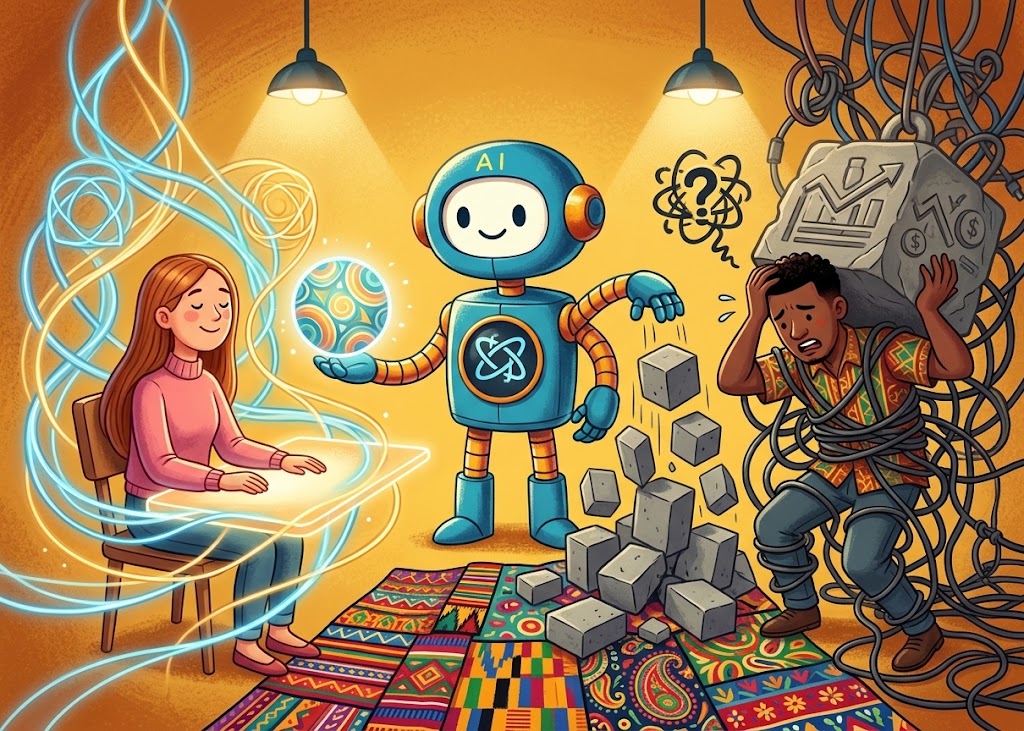
Emerging generative AI (GenAI) tools, which are known to encompass cultural biases, are anticipated to significantly impact creative work, especially as they become incorporated into professional software suites such as Adobe Creative Cloud, Canva, Figma, and Miro. Professionals and pundits predict positive and negative outcomes, ranging from substantial productivity gains to the risk of reduced employment opportunities for creative practitioners, concerns around intellectual property, and fears that a lack of diversity in training data will result in diminished variety of creative outputs. This uncertainty makes it vital to examine how generative AI is used and perceived at the cutting edge of adoption across professional contexts in both the Global North and South. We conducted semi-structured interviews with 20 professional User Experience (UX), User Interface (UI) and graphic designers from across cultural contexts, with most from Global South backgrounds. Participants were at varying stages of GenAI adoption; some were exploring and others were integrating GenAI tools into their professional workflows. Using reflexive thematic analysis, we analysed participants’ experiences to understand how socio-economic and cultural situatedness shaped their engagement with GenAI tools. Our findings revealed a complex, asymmetric landscape of AI adoption within professional design workflows. We contribute insights into asymmetries within extended creative cognition, uncovering a paradox of access wherein AI provides essential scaffolding for participants’ work while simultaneously imposing a standardisation tax that constrains situated cultural expression. We propose design directions for GenAI tools that may promote cultural inclusivity and ethically responsible Human-AI collaboration.

read more
post-thumb

[Research]

New paper alert: Reviving Reflection-in-Action: Instilling Designerly Thinking in AI-Supported Ideation through Multimodal Prompting

Published at C&C ‘26: Proceedings of the 2026 Conference on Creativity and Cognition, London, UK

Authors: Samangi Wadinambiarachchi, Jenny Waycott, Greg Wadley

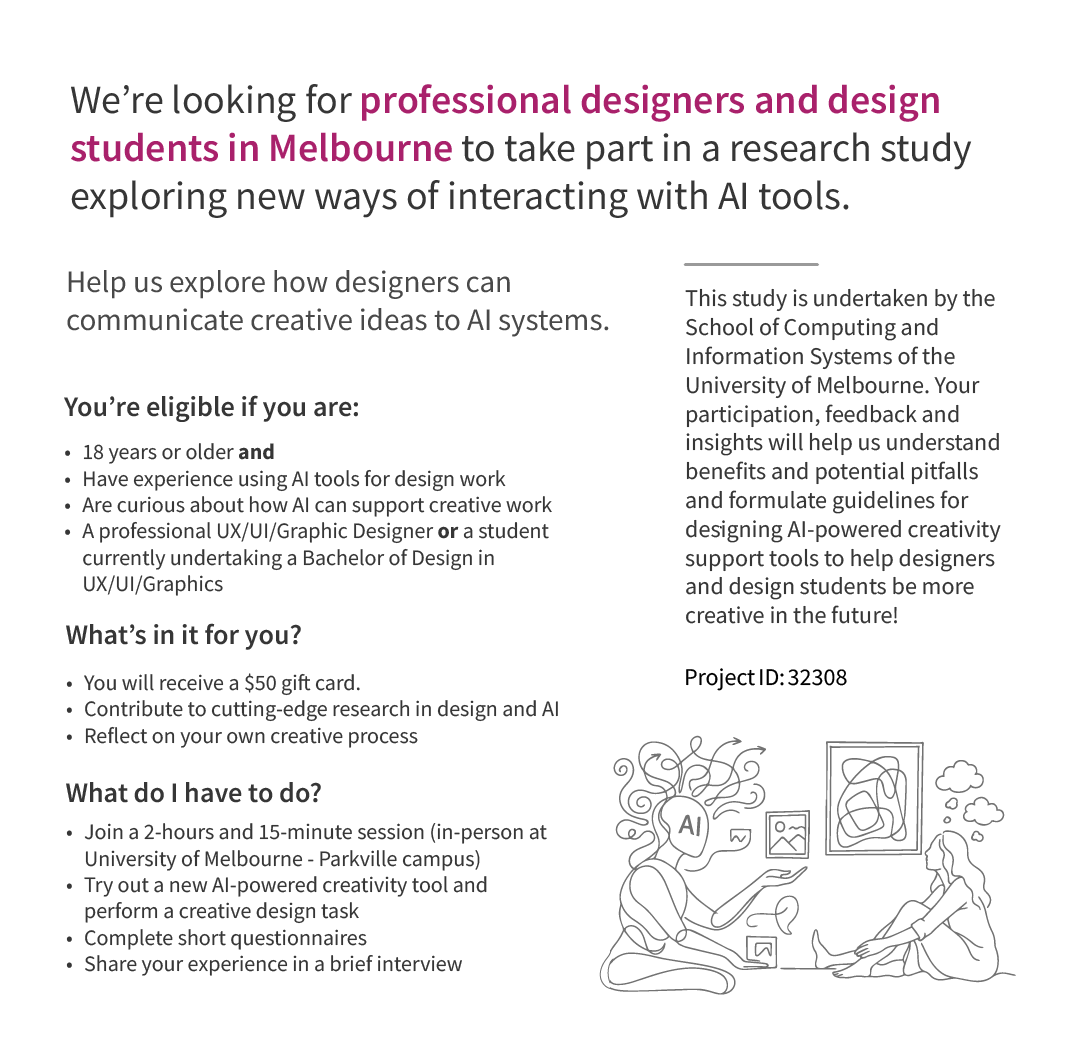
Current AI-powered creativity support tools (AI-CSTs) primarily use text prompting to generate solution-oriented outputs. However, the potential value of multimodal prompting in designer-AI interaction, specifically the introduction of productive friction to encourage iteration and reflection, has not been fully explored. To address this, we developed SketchifAI, a prototype AI-CST, and evaluated it with design students. In a mixed-methods, within-participants study, we examined how different input modalities (text, sketch, and sketch-plus-tags) affected design students’ perceived ability to express their intent, their perception of creativity support, and their divergent thinking performance. Our preliminary findings suggest that the sketch modality tended to enhance fluency, with inconclusive evidence for differences in variety, originality, or quality compared to text modality. Yet, paradoxically, participants showed a strong preference for text prompting. We discuss how AI tools might be designed to reintroduce reflection-through-sketching, ensuring that designer-AI interaction supports, rather than erodes, essential design skills in students.

read more
post-thumb

[Research]

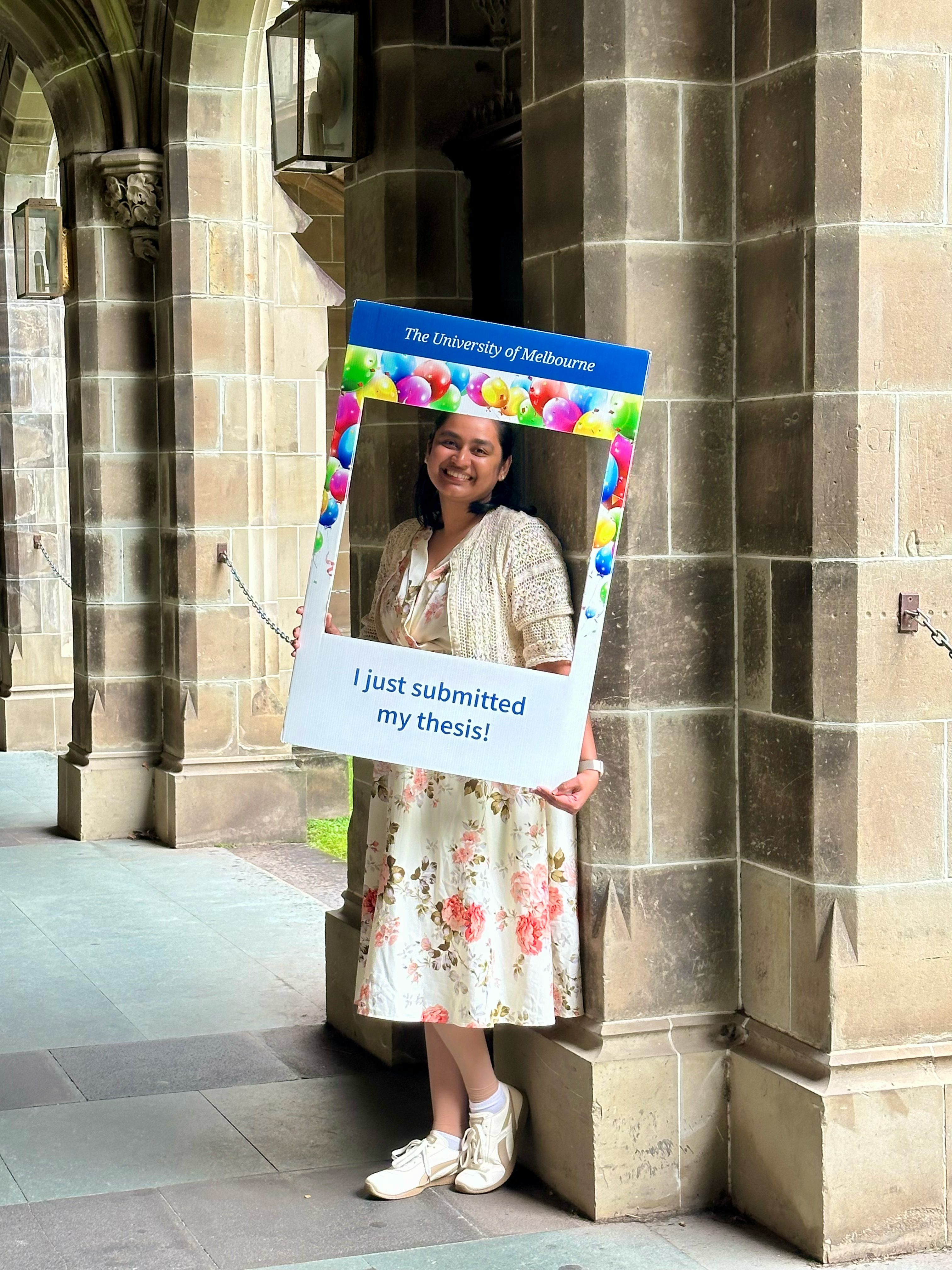
I submitted my PhD thesis

On the first week of April, 2026, I submitted my PhD thesis titled “AI-powered Creativity Support Tools in Visual Design Work”, marking the end of a deeply transformative journey at the University of Melbourne and the beginning of an exciting new chapter. This research sits at the intersection of artificial intelligence and design practice, exploring how AI-powered tools can support and enhance the creative processes of visual designers. I approach this topic with a critical and unbiased lens; neither celebrating AI as a revolution nor dismissing it as a threat, but asking the harder, more honest questions: How do designers truly think, create, and innovate? And where does AI genuinely help, and where does it fall short?

read more
post-thumb

[Research]

Our newest paper: Imagining Design Workflows in Agentic AI Futures

Published at OZCHI ‘25: 37th Australian Conference on Human-Computer Interaction

Authors: Samangi Wadinambiarachchi, Jenny Waycott, Yvonne Rogers, Greg Wadley

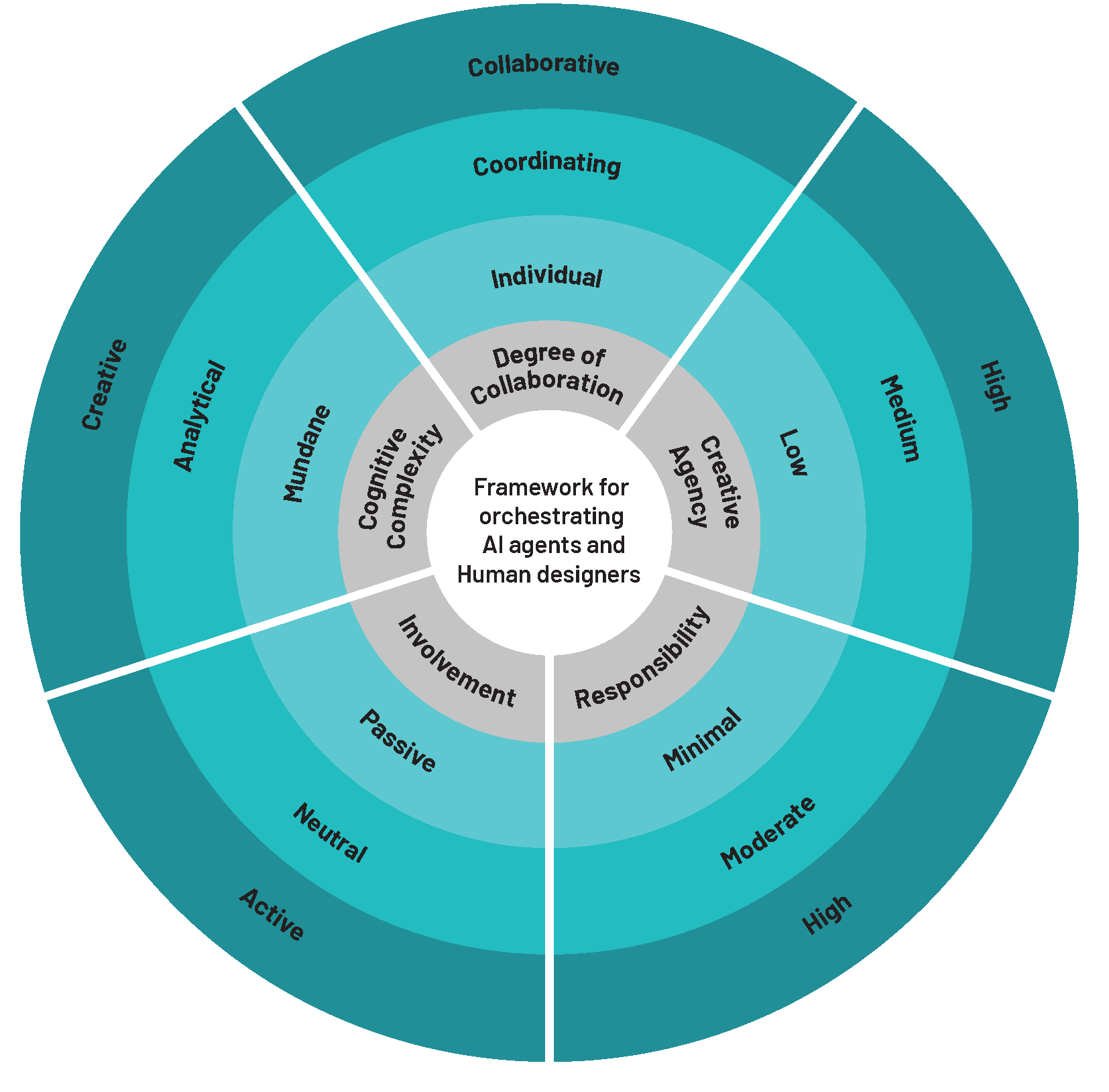
As designers become familiar with generative AI, a new concept is emerging: agentic AI. While generative AI produces output in response to prompts, agentic AI systems promise to perform mundane tasks autonomously, potentially freeing designers to focus on what they love: being creative. But how do designers feel about integrating agentic AI systems into their workflows? Through design fiction, we investigated how designers want to interact with a collaborative agentic AI platform. Ten professional designers imagined and discussed collaborating with an AI agent to organise inspiration sources and ideate. Our findings highlight the roles AI agents can play in supporting designers, the division of authority between humans and AI, and how designers’ intent can be explained to AI agents beyond prompts. We synthesise our findings into a conceptual framework that identifies authority distribution among humans and AI agents and discuss directions for utilising AI agents in future design workflows.

read more
post-thumb

[Research]

I attended Dagstuhl Seminar: Augmenting Human Creativity with AI

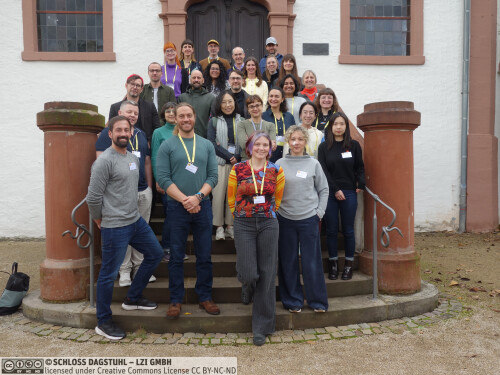
I attended the “Augmenting Human Creativity with AI” seminar at Schloss Dagstuhl, Germany, a renowned location for computer scientists to discuss emerging research topics. Being surrounded by many HCI experts working on creativity and design was so wonderful. To be a part of all illuminating discussions around AI in creativity and design, the current state of the art, challenges, and the way forward was indeed inspiring.

read more