Empirical Studies in HCI

post-thumb

[Research]

New paper alert: Reviving Reflection-in-Action: Instilling Designerly Thinking in AI-Supported Ideation through Multimodal Prompting

Published at C&C ‘26: Proceedings of the 2026 Conference on Creativity and Cognition, London, UK

Authors: Samangi Wadinambiarachchi, Jenny Waycott, Greg Wadley

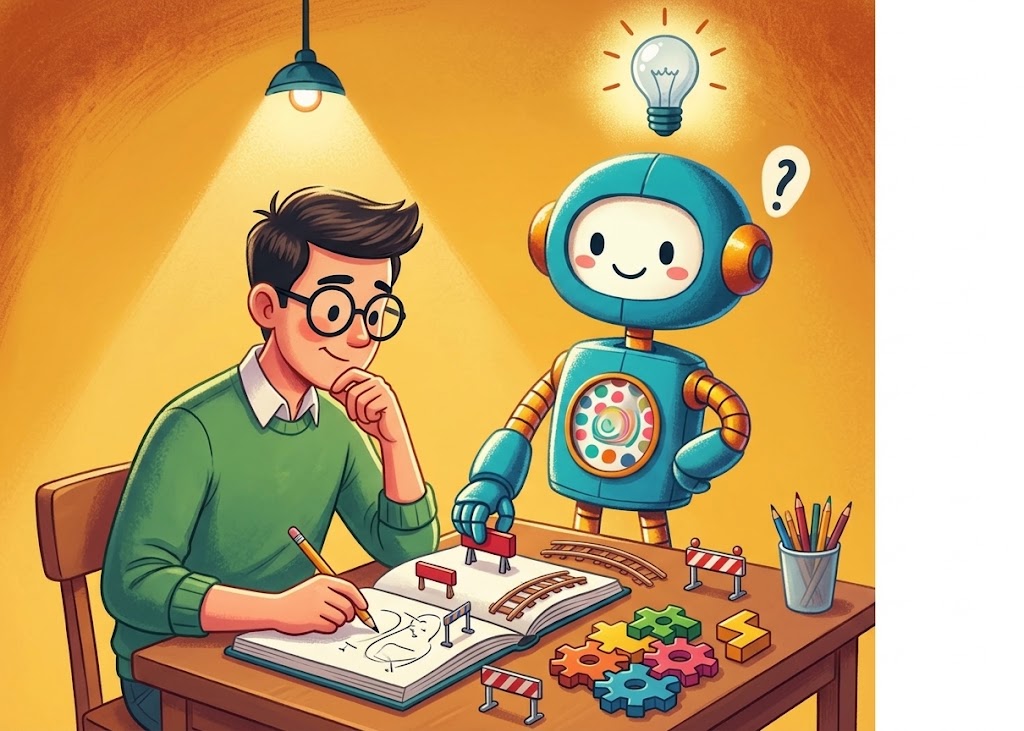
Current AI-powered creativity support tools (AI-CSTs) primarily use text prompting to generate solution-oriented outputs. However, the potential value of multimodal prompting in designer-AI interaction, specifically the introduction of productive friction to encourage iteration and reflection, has not been fully explored. To address this, we developed SketchifAI, a prototype AI-CST, and evaluated it with design students. In a mixed-methods, within-participants study, we examined how different input modalities (text, sketch, and sketch-plus-tags) affected design students’ perceived ability to express their intent, their perception of creativity support, and their divergent thinking performance. Our preliminary findings suggest that the sketch modality tended to enhance fluency, with inconclusive evidence for differences in variety, originality, or quality compared to text modality. Yet, paradoxically, participants showed a strong preference for text prompting. We discuss how AI tools might be designed to reintroduce reflection-through-sketching, ensuring that designer-AI interaction supports, rather than erodes, essential design skills in students.

read more
post-thumb

[Research]

Our newest paper: Imagining Design Workflows in Agentic AI Futures

Published at OZCHI ‘25: 37th Australian Conference on Human-Computer Interaction

Authors: Samangi Wadinambiarachchi, Jenny Waycott, Yvonne Rogers, Greg Wadley

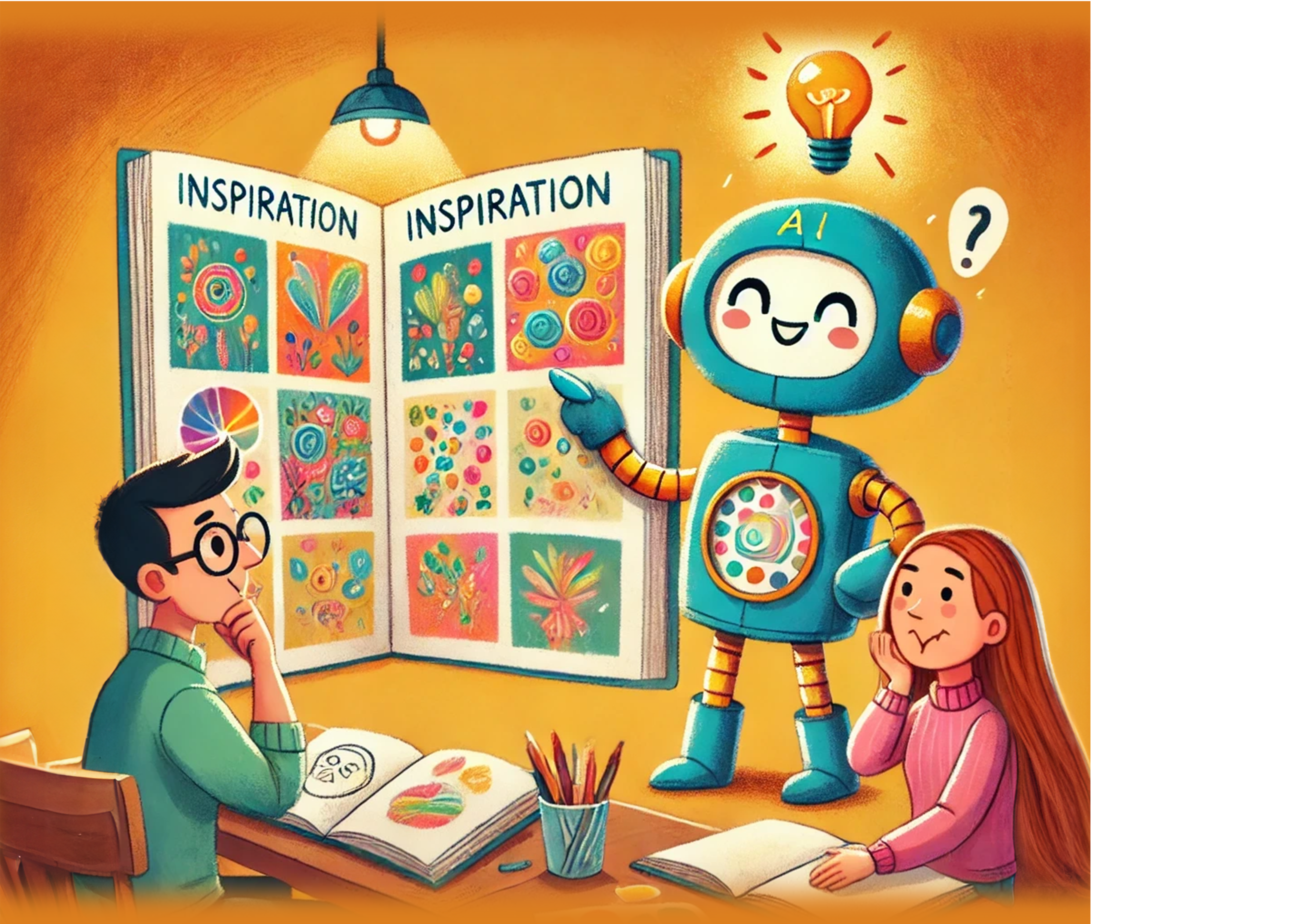
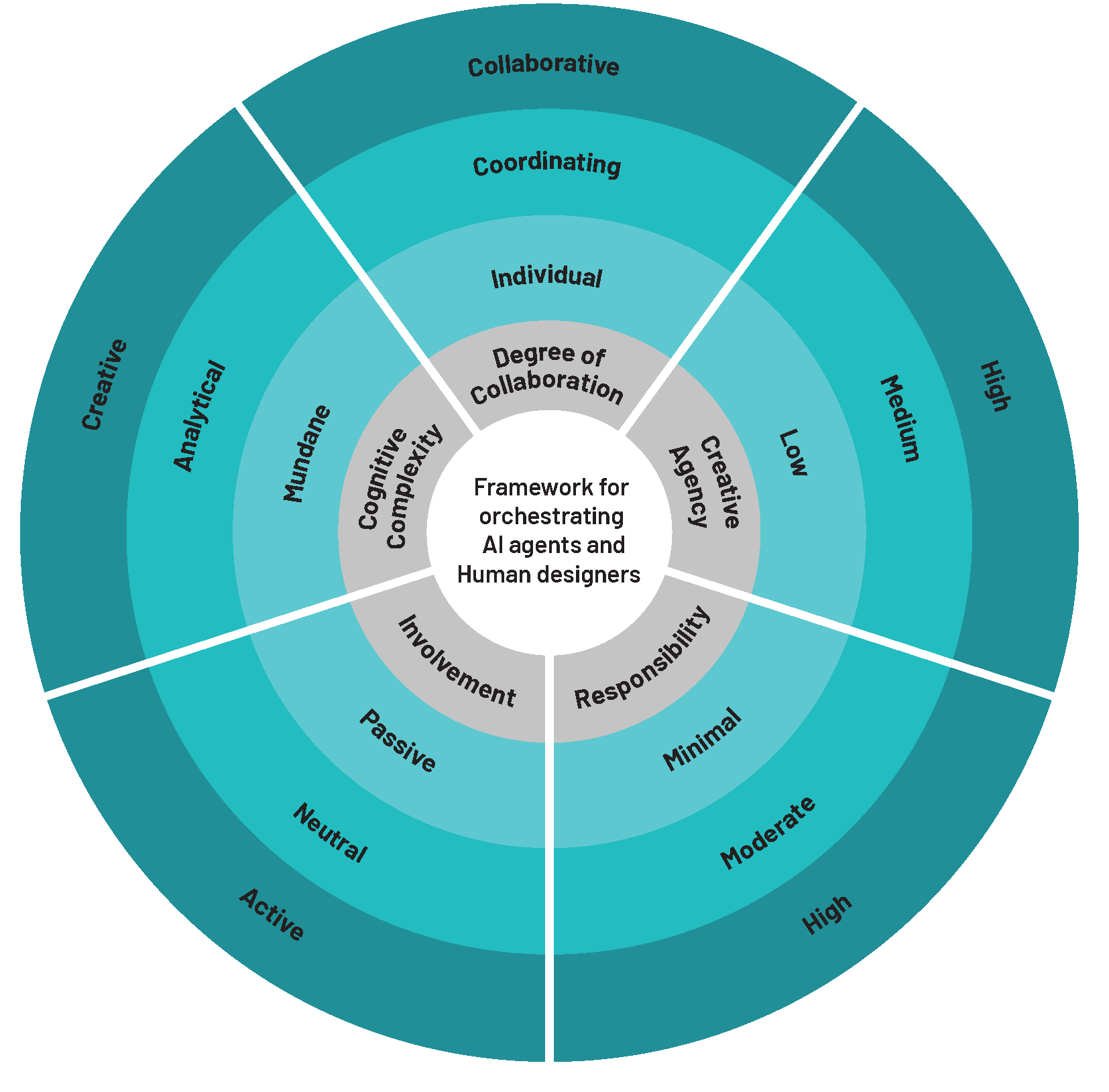
As designers become familiar with generative AI, a new concept is emerging: agentic AI. While generative AI produces output in response to prompts, agentic AI systems promise to perform mundane tasks autonomously, potentially freeing designers to focus on what they love: being creative. But how do designers feel about integrating agentic AI systems into their workflows? Through design fiction, we investigated how designers want to interact with a collaborative agentic AI platform. Ten professional designers imagined and discussed collaborating with an AI agent to organise inspiration sources and ideate. Our findings highlight the roles AI agents can play in supporting designers, the division of authority between humans and AI, and how designers’ intent can be explained to AI agents beyond prompts. We synthesise our findings into a conceptual framework that identifies authority distribution among humans and AI agents and discuss directions for utilising AI agents in future design workflows.

read more
post-thumb

[Research]

I attended Dagstuhl Seminar: Augmenting Human Creativity with AI

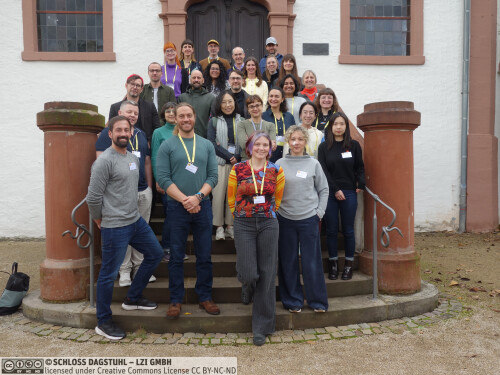
I attended the “Augmenting Human Creativity with AI” seminar at Schloss Dagstuhl, Germany, a renowned location for computer scientists to discuss emerging research topics. Being surrounded by many HCI experts working on creativity and design was so wonderful. To be a part of all illuminating discussions around AI in creativity and design, the current state of the art, challenges, and the way forward was indeed inspiring.

read more
post-thumb

[Research]

The effects of Generative AI on Design Fixation and Divergent Thinking

Authors: Samangi Wadinambiarachchi, Ryan M. Kelly, Saumya Pareek, Qiushi Zhou, Eduardo Velloso

Generative AI systems have been heralded as tools for augmenting human creativity and inspiring divergent thinking, though with little empirical evidence for these claims. This paper explores the effects of exposure to AI-generated images on measures of design fixation and divergent thinking in a visual ideation task. Through a between-participants experiment (N=60), we found that support from an AI image generator during ideation leads to higher fixation on an initial example. Participants who used AI produced fewer ideas, with less variety and lower originality compared to a baseline. Our qualitative analysis suggests that the effectiveness of co-ideation with AI rests on participants’ chosen approach to prompt creation and on the strategies used by participants to generate ideas in response to the AI’s suggestions. We discuss opportunities for designing generative AI systems for ideation support and incorporating these AI tools into ideation workflows.

read more