Undergraduate work
enKindler
A strategic interactive system that helps design students break through creative blocks and reach higher levels of creativity.
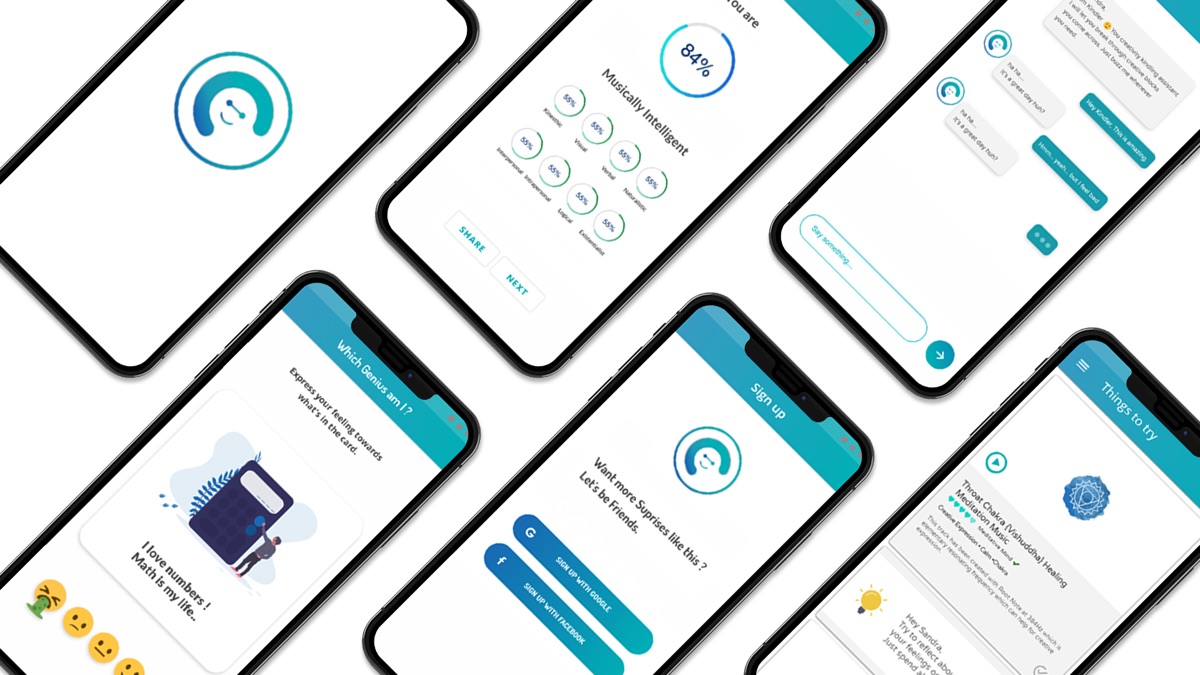
- Scope
- Comprehensive design project, Bachelor of Design
- Duration
- 4 months
- Focus
- System design, UX design and research, UI design, branding, smart space concept generation
- Users
- Design undergraduates
Overview
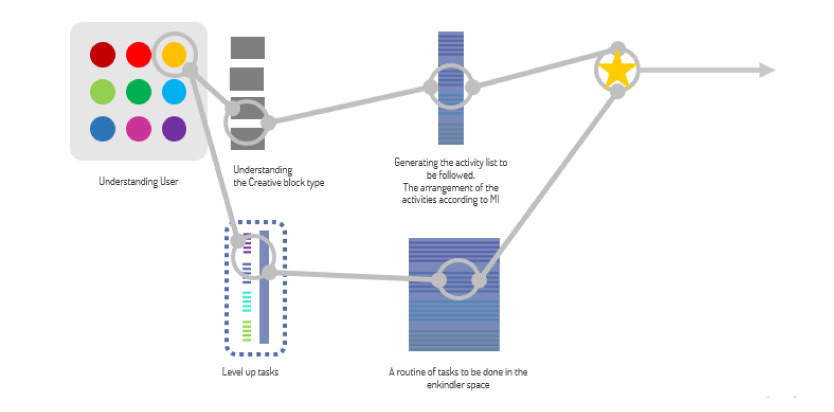
This project is a strategic interactive system design, which helps design students to break through creative blocks they come across in their creative process by helping them to reach higher levels of creativity. The system provides design students with a set of personalised tips and tools based on their learner type and the practices derived from both western and eastern traditions with neuroscientific evidence. Thus, this system enables students to express their embedded ideas in the most efficient way.
The challenge
The majority of design students face difficulties in expressing their own creative ideas due to creative blocks they encounter in the design process. Therefore, this project focused on finding a solution to enable young designers to express their ideas the optimum way by breaking through creative blocks.
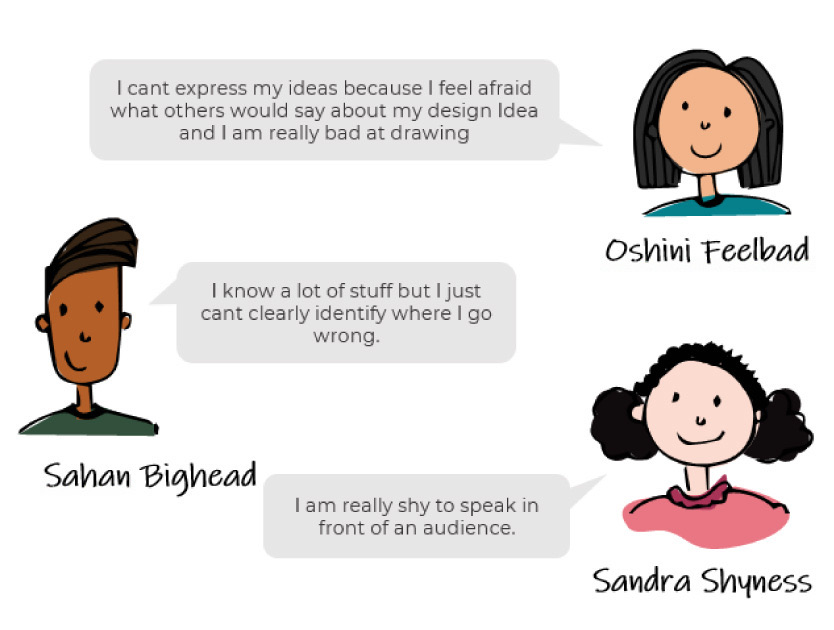
Users: Design undergraduates who struggle with the inability to express and communicate their design ideas clearly and effectively.
Understanding creative blocks
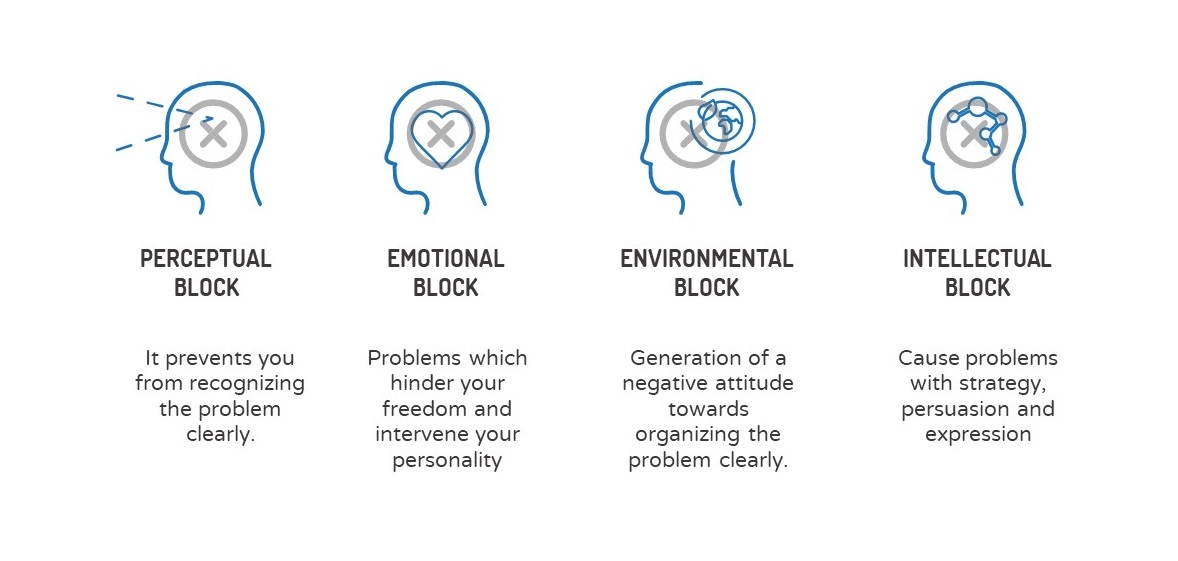
When referring to literature, I figured out that a student might encounter four different types of creative blocks during their design process. Namely, they are: perceptual, emotional, environmental and intellectual blocks. Furthermore, I understood that when a student moves up the creativity levels, the number of creative blocks they encounter becomes fewer.
Inspiration
Various techniques are defined in both eastern and western practices. I was inspired by the use of “chakras” and universal energies in eastern philosophies, which give a detailed description of methods that could be incorporated into one's daily practice. It is said that, in return, this enables the person to reach higher levels of creativity as it develops self-awareness.
With this understanding I focused on finding a way that enables design students to break through creative blocks and guide them to reach higher levels of creativity by developing self-awareness.
The design process
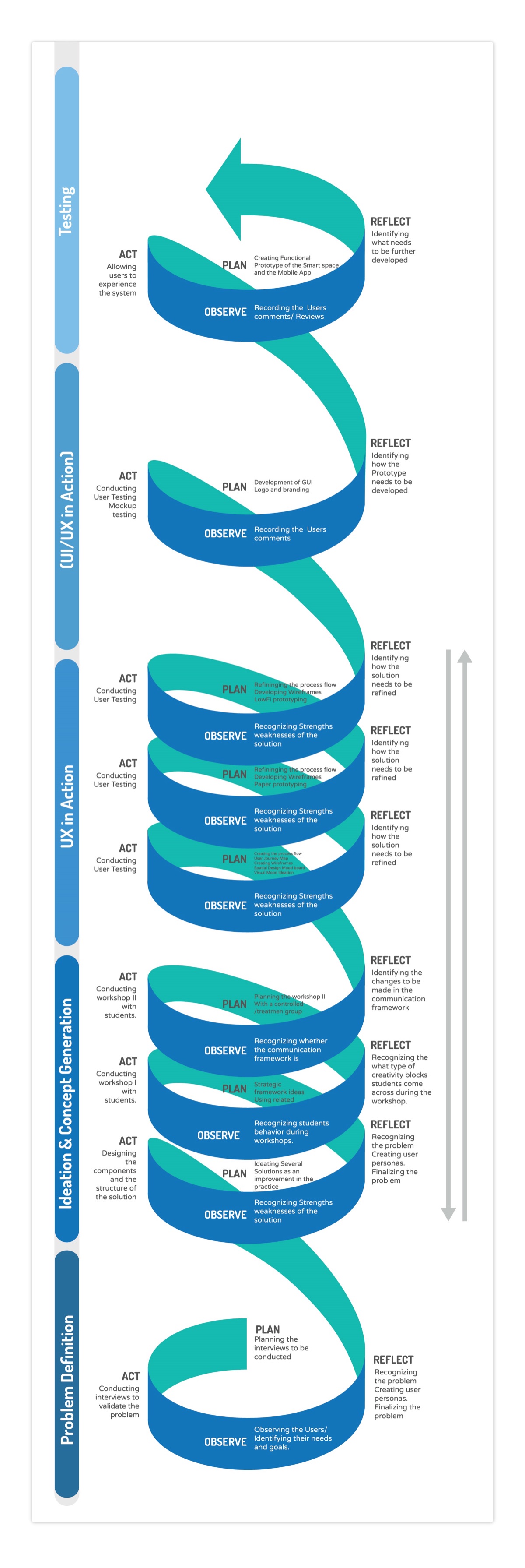
After several attempts with different design methods, I figured out that the design process for this project cannot be sequential. Therefore, I came up with a spiral process merging both the action research cycle and the sequential seven stages of design thinking.
Personas
Abstract idea of the interactive system
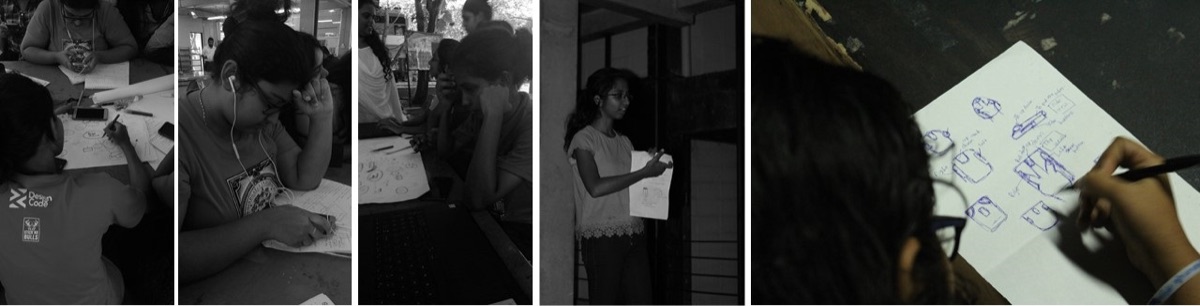
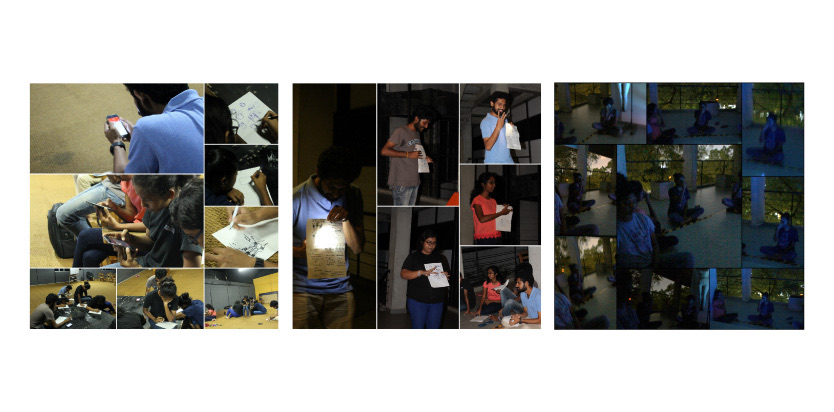
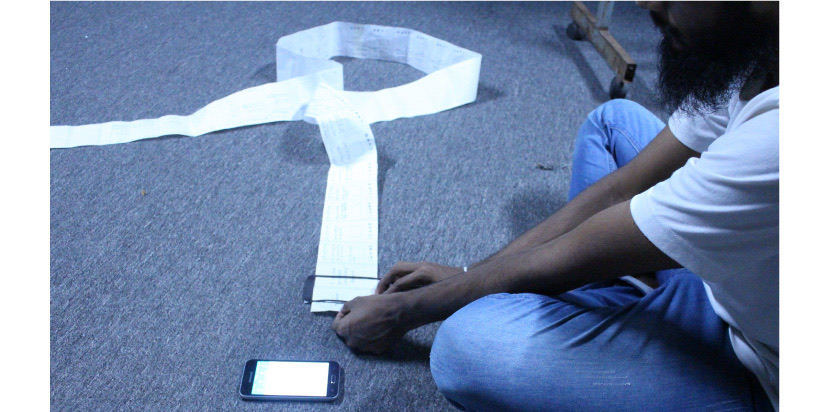
Testing the intervention: workshops
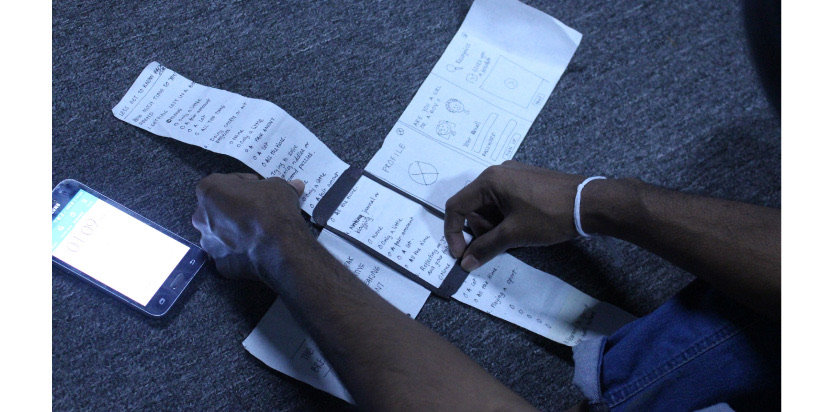
Paper prototyping
Results
Branding
Limitations of the project
- Due to time constraints and a lack of competency in physical space design, fabrication and further development were done with advice from an architect.
- Creative block identification was limited to classroom and academic process scenarios; thus, environmental blocks due to external causes were disregarded.
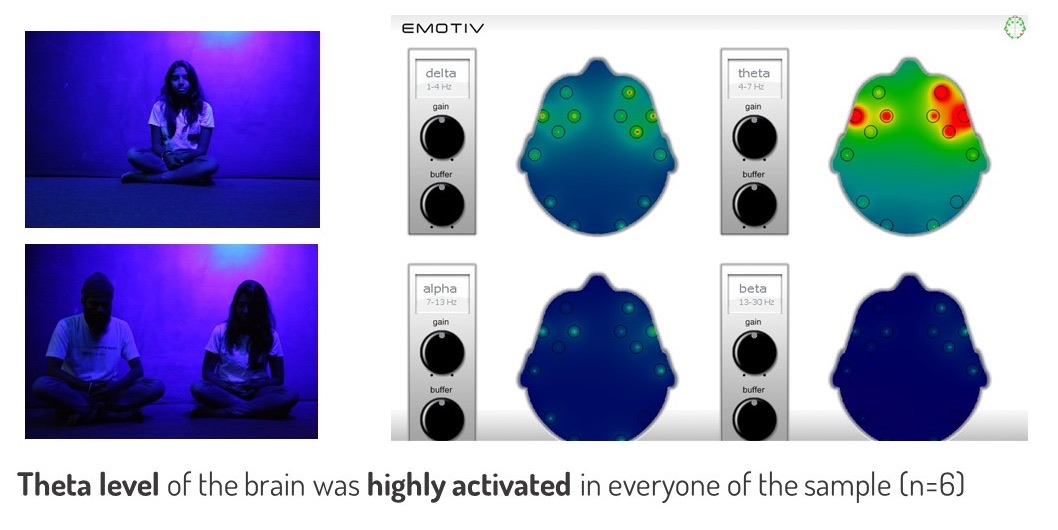
- The validity of the suggested strategic approach was verified using user reflective diaries. Brain state analysis was conducted within technical limitations.
- The application was developed only in English.